Author: Lsusr

  • The Time War

    The Time War

    Zvi Mowshowitz recommended the book This is How You Lose the Time War on his blog. He said to read the book blind. I bought a copy and read it blind.

    On the back cover of This is How You Lose the Time War is a summary selling the book to readers. I do not know what the summary says. I have never read it.

    Super Bowl Sunday

    On February 8, 2026, I bicycled to Pike Place Market where I buy groceries. Most of the stores were closed. That’s because it was Super Bowl Sunday. Fortunately, Pike Place Market Creamery was open. The cashier appeared bored, and was scrolling through her phone.

    “I hope you’re working because you want to and not because somebody had to take this shift,” I said.

    The cashier said she wasn’t into football.

    “I understand,” I said, “I found out a friend was having a Super Bowl party that I wasn’t invited to, so I asked him to invite me. He graciously acquiesced. Then I realized I just wanted to be included. I didn’t actually want to watch the Super Bowl. So I told him I wouldn’t be going.”

    On my way out of the market, I passed the famous pig. A family of Taiwanese tourists were gathered around it, confused. I heard the word “魚”, which is a pictograph of a fish. They were looking for the fish throwers.

    “歡迎!對了。魚人在這裡每天推魚。但是,今天是 Super Bowl(超級碗子)。Super Bowl 是美國最大最重要的 sport。今天,西雅圖屬於兩個體育團參加最大的比賽。所以,所有人都回家看電視。魚人昨天來了。他們明天來。他們今天早上推魚了。現在他們不在,” I said. [This Chinese is not entirely correct, but it communicated the important information.]

    I thought that was fun adventure so I raced back to the creamery to share my story with the cashier before her shift ended.

    “The quiet is nice,” I said.

    She agreed.

    Super Bowl Wednesday

    That Wednesday, I went grocery shopping at Pike Place Market again. I found out that Seattle had won because the streets were packed with people, the streets were closed to cars, and there was a giant parade through the city.

    Normally I like it when the streets are closed to cars because it makes bicycling safer and more pleasant, but there were so many people celebrating I had to walk all the way to Pike Place Market and back. The ordeal was so awful I had to take the next few days off from work.

    Good Luck, Have Fun, Don’t Die

    On Thursday, I noticed that my Google Calendar said “Good Luck, Have Fun, Don’t Die comes out”. I knew Good Luck, Have Fun, Don’t Die must be a movie, but I had forgotten was the movie was about. It had been months since I had watched that trailer that caused me to put Good Luck, Have Fun, Don’t Die on my Google Calendar.

    I trusted my past self and went to see the movie. As soon as the movie ended, I sent the following message to Rowan and separately to the Postman.

    You have been selected for a mission. Do you accept?

    [Y/n]

    They both accepted. I sent them the following message:

    Until your mission is complete, you must avoid the following media like the plague.

    • algorithmic media feeds (including YouTube, TikTok, Twitter, Snapchat, Spotify, Netflix, LinkedIn, Pinterest, Twitch, Substack, reddit, LessWrong, Facebook, Instagram, etcetera). Direct messaging is permitted, such as via Facebook Messenger and Discord.
    • news media
    • videogames
    • virtual reality
    • video of any kind, except “The Matrix” (1999), “Tenet” (2020), and “Everything Everywhere All At Once” (2022)

    {An exception is permitted for media necessary to your employment.}

    Do you accept? [Y/n]

    Rowan wanted an estimate of how long this would take. I estimated 2 weeks. The Postman said he might be leaving on a work trip as soon as 1 week. I revised the estimate down to 1 week.

    They asked if partial waivers could be granted to the media restrictions. Yes, but only on a case-by-case basis, and only with careful justification.

    Rowan asked if they were allowed to know what the mission was before they accepted it. I said no.

    They accepted these terms.

    Do you know what “Good Luck, Have Fun, Don’t Die” is a reference to? [Y/n]

    DO NOT LOOK IT UP

    They answered “no”.

    Welcome to The Time War, where ignorance is ammunition. You are leader of team RED. Your mission has two parts.

    Part 1 is to assemble a team of exactly 6 people (including yourself) who answer yes-yes-no to the above 3 questions.

    When your team is ready reply “RED team assembled.”

    [The Postman got this same message, except with “BLUE” instead of “RED”.]

    It is imperative that you and your team remain ignorance of what “Good Luck, Have Fun, Don’t Die” is a reference to. The media restrictions are to protect you and your team from this information.

    BLUE Team Leader assembled his team of 6, named me “WHITE”, and requested that I change “team leader” to “Actual”. Thus, he became “BLUE Actual” and I became “WHITE Actual”.

    RED Actual came down with the sniffles. I didn’t want him incentivised to infect others, so I revised his quota down to the team of 2 he already had. BLUE Actual approved this leniency.

    Part 2 of your mission is to watch the movie “Good Luck, Have Fun, Don’t Die” together with team BLUE, in a movie theater.

    After you have scheduled your rendezvous, send me the date and time.

    DO NOT BRING CELL PHONES TO YOUR RENDEZVOUS

    Here is RED Actual’s phone number: [redacted]

    In the end, 6/13 people showed up to the movie.

  • The Law of Gravity

    “I am here to learn about the Law of Gravity,” said the student.

    “You’ve come to a right place,” said the physicist.

    “Is this the Temple of Gravity?” asked the student.

    “No. This is the Jet Propulsion Laboratory,” said the physicist.

    “I wish to learn about gravity. Where can I find a temple dedicated to the worship of gravity?” asked the student.

    “There is no such thing,” said the physicist.

    “Why not?” asked the student, “Is it not true that gravity created the Earth, the Sun, the Moon and the stars?”

    “That is true…” said the physicist.

    “And do you not obey the Law of Gravity here?”

    “That is also true…” said the physicist, “But we obey the Law of Gravity everywhere.”

    “You must be very devoted to the Law of Gravity,” said the student.

    “Nonsense. We obey the Law of Gravity because we could not do otherwise,” said the physicist.

    “What would happen if you disobeyed the Law of Gravity? Would you be sent to hell for blasphemy?” asked the student.

    “No,” said the physicist.

    “Then why do you obey it?” asked the student.

    “I do not know,” said the physicist.

    “Ah, I see that you do not understand the law of gravity,” said the student.

    “That is technically true, but not relevant to this conversation. I believe that I understand the Law of Gravity better than you do,” said the physicist.

    “But I have memorized $F=\frac{m_1m_2}{r^2}$,” said the student.

    “And what is $r$?” asked the physicist.

    “Radius,” said the student.

    “And what is the radius?” asked the physicist.

    “The bone that runs parallel to the ulna,” said the student.

  • Primary Sources on Awakening

    This is a list of writings I have high confidence were authored by awakened people.

    Era of Prophecy

    The Four Noble Truths by Siddhartha Gautama

    Dao de Jing by Laozi

    Bhagavad Gita <author unknown>

    Ecclesiastes <author unknown>

    The Sermon on the Mount by Jesus

    The Quran by Mohammad (the last prophet)

    Era of Religion

    Dewdrops on a Lotus Leaf: Zen Poems of Ryōkan by Ryōkan

    Zen Mind, Beginner’s Mind by Shunryu Suzuki

    Hardcore Zen: Punk Rock, Monster Movies, & the Truth About Reality by Brad Warner

    The Universe in a Single Atom by Tenzin Gyatso

    The Novice: A Remarkable Story of Love and Truth by Thích Nhất Hạnh

    Era of Hackers

    Mastering the Core Teachings of the Buddha: An Unusually Hardcore Dharma Book by Daniel Ingram

    Neurotic Gradient Descent by Romeo Stevens

    Luminous Dharma by Jason Bartlett

    reddit comments by thewesson

    LessWrong posts by Gordon Seidoh Worley

    @nickcammarata Twitter feed by Nick Cammarata

    @spacepunk Twitter feed by Space Punk

    Cyberbuddhism.org by Lsusr (obviously)

    [TODO: Your name here.]

  • Mindfulness

    Mindfulness is the maintenance of lucidity prior to awakening.

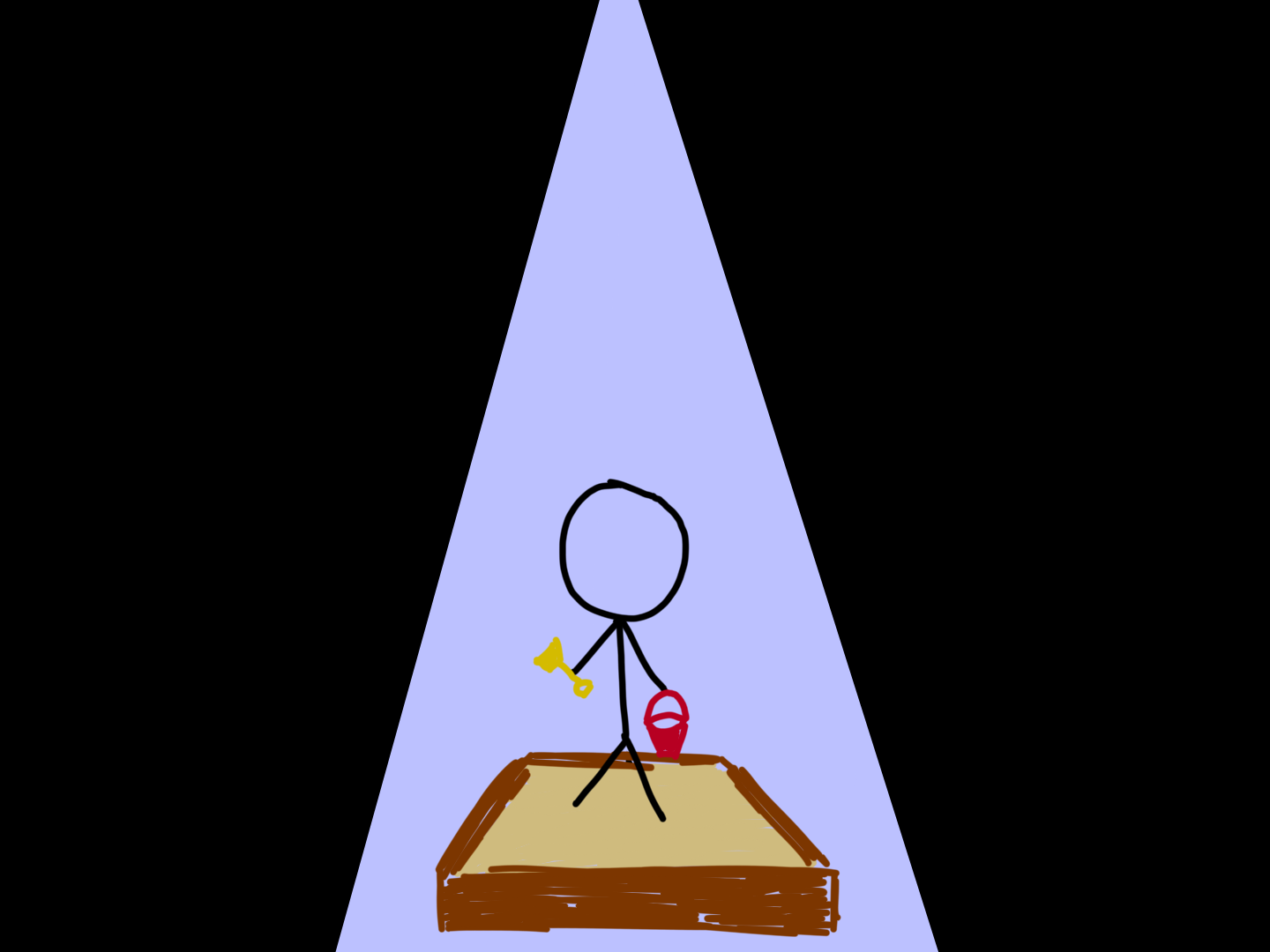
    The sandbox in your brain induces misperceptions such as craving-aversion and free will. While meditating on a cushion, it is possible to cultivate lucidity, which means that one or more misperceptions is not present.

    Altered states are, by definition, temporary. When a beginning meditator gets off the cushion, the altered state goes away. When the altered state goes away, the lucidity almost1 always goes away too.

    But altered-state-induced lucidity doesn’t go away immediately. Altered states have inertia. It takes time for your brain to reset to its baseline attractor. How long it takes for your brain to revert to misperception depends partially on what is happening in the physical world. A noisy television can shatter your attention immediately, but calm activities like folding laundry can keep the lucidity burning longer. Meditation is like starting a fire, and mindfulness is like keeping that fire going. Generally-speaking, lucidity is usually found in seated meditation. Mindfulness is the process of extending that lucidity beyond the cushion, gently and repeatedly, until eventually lucidity becomes your default state of mind and you have a permanent altered trait.

    Real calmness should be found in activity itself. We say “It is easy to have calmness in inactivity, but calmness in activity is true calmness.”

    After you have practiced for a while, you will realize that it is not possible to make rapid, extraordinary progress. Even though you try very hard, the progress you make is always little by little. It is not like going out in a shower in which you know when you get wet. In a fog, you do not know you are getting wet, but as you keep walking you get wet little by little. If your mind has ideas of progress, you may say, “Oh, this pace is terrible!” But actually it is not. When you get wet in a fog it is very difficult to dry yourself. So there is no need to worry about progress. It is like studying a foreign language; you cannot do it all of a sudden, but by repeating it over and over you will master it.

    Zen Mind, Beginner’s Mind by Shunryu Suzuki

    1. If the lucity is permanent, then that means an insight cycle has begun. This can happen only once for each kind of lucidity, because that is what “permanent” means. ↩︎
  • Sandboxing the Homunculus

    Sandboxing the Homunculus

    To understand the problem of dualistic experience, it is important to treat the brain as a cybernetic system.

    This is a picture of your cerebrum, the part of your brain that embeds your consciousness.

    [TODO image of human brain with cerebrum labeled]

    The purpose of your cerebrum is to send signals that tell your body what to do.

    [TODO image of cerebrum with output signal moving a hand]

    To determine what signals it should send, the cerebrum needs to know what’s going on in the world. Your cerebrum thus gets input signals from your senses.

    [TODO image of cerebrum with output signal and input signal]

    The data going from your eyes into your cerebrum is, at best, only a snapshot of what is happening in the physical world. That’s not enough information to work from. What if a bad guy is behind you? The cerebrum doesn’t make decisions just based off of what information is coming through the senses right this instant. The cerebrum instead buids a real-time simulation of the world called your umwelt, which is merely updated by sensory inputs. The algorithm it uses for this is called predictive coding.

    [TODO image of cerebrum with outside object, input signal, and simulated object]

    Predictive coding isn’t the only important algorithm going on in the brain. There’s another important algorithm called operant conditioning1 (aka reinforcement learning). Operant conditioning is the idea that certain behaviors are reinforced. If you’re hungry and you eat a yummy cookie, then this behavior is likely to be reinforced through the operant conditioning algorithm.

    Basically:

    • Predictive takes input signals and uses them to create your umwelt.
    • Operant condition takes your umwelt and uses it to make decisions about what output signals to send.

    Your umwelt and the external physical world are similar and have many 1-to-1 correspondences. There is something called “your right hand” in the physical world and there is something called “your right hand” in your umwelt. If your right hand is cut off in the physical world then your right hand will also be cut off in your umwelt, due to your predictive coding algorithm updating your umwelt.

    If you get hunger signals from your senses, then your predictive coding updates your umwelt to include hunger. Your operant conditioning algorithm (seeded by hard-coded instincts) decides to output motor actions that eat food. Your umwelt updates itself immediately because it is a simulation of physical causality. Later, the predictive processing algorithm updates your umwelt either directly, via surprise, or indirectly, via nonsurprise, according to sensory signals it received from the physical world.

    [TODO circular diagram: stomach -> brain [I’m hungry] -> eat food (smiling hamburger) -> stomach. Subtitle: “It’s an Impossible burger.”]

    When the operant conditioning algorithm tells the physical world “move my left hand”, it sees your left hand move in your umwelt. Your operant conditioning algorithm doesn’t know that your umwelt and the physical world are different things. Your operating condition algorithm doesn’t even notice a lag between action and observation because your umwelt is a real-time prediction, not an after-the-fact observation. Your operant gets ground truth from one universe (your umwelt) and sends decision signals to a different reality (the physical one), all while not even noticing that they’re two fundamentally different phenomenological planes of existence. From the perspective of your operant conditioning algorithm, there is only one universe.

    Since the operant conditioning algorithm doesn’t observe exteranl physical reality, it only really cares about your umwelt. Your umwelt is neural activity running in your cerebrum, and the operant conditioning algorithm is an algorithm modifying the neural activity in your cerbrum, there’s an obvious failure mode: Instead of sending signals telling your body to eat food, your operant conditioning algorithm might just modify your umwelt to say “not hungry”.

    [TODO diagram: stomach -> brain I’m hungry -> No I’m not hungry. This doesn’t work. (lonely hamburger). Subtitle: This one is an Impossible burger.]

    This is bad and stupid. The part in your brain that tells your body what to do based on the umwelt should not be able to crudely, deliberately, and directly modify that same umwelt, because if it could it’d just modify the world into sunshine and rainbows instead of doing its job.

    [TODO comic of brain with sunshine and rainbows inside and rain outside]

    Consequently, normative human brains fall into a dynamical attractor where there is a world-model part and a decision-making part, and the decision-making part has read-only access to the world-model part. This sandboxed decisionmaker is called the homunculus.

    1. Operant conditioning is specific to animals. People from a machine learning background will often use the broader term reinforcement learning, which applies to both animals and computers ↩︎
  • Biology Cannot Use Backpropagation

    Biology Cannot Use Backpropagation

    Current AI uses neural networks. The human brain is a neural network too. Artificial and biological neural networks are similar in the sense that both run lots of parallel computations. However, there are two big important differences between them.

    1. The human brain trains online whereas (at the time of this post, in 2026) consumer LLMs train offline.
    2. The human brain propagates axon potentials forward, whereas AI propagates high-fidelity signals both forward and backward.

    Online vs Offline Training

    When you use ChatGPT, the neural network doesn’t get any smarter. ChatGPT saves ephemeral state in the hidden representations within its transformer architecture. ChatGPT sometimes saves durable state into its context window. But the words you type onto ChatGPT don’t update the weights in ChatGPT’s neural network—at least not immediately. Your conversations may be used later when OpenAI does their next big offline training run. In this sense, big AIs like ChatGPT have their networks trained offline. Only the context and hidden representations are updated online. The network weights are updated offline.

    The human brain is different. While sleeping can be considered a form of offline learning, the synaptic connections between the neurons in your brain are updated continuously in real time i.e. online.

    Forward-Only Propagation

    Signals flow through artificial neural networks forward and backwards. When you use ChatGPT, the signals flow forward. But when ChatGPT is trained, the signals flow first forward and then backward.

    [TODO image of using ANN forward only]

    [TODO image of training ANN forward and then backward]

    ChatGPT’s neural network is a mathematical model trained via an algorithm called backpropagation. To train a neural network with backpropagation, you first supply a large set of input–target training data pairs. You feed the input data into the network to get output data. Then you compare the output data to the target to get an error. The error is propagated backwards through the network, and weights are updated in the direction that reduces error.

    The human brain does not use backpropagation. How do we know? Because literal gradient propagation is biologically impossible. Here is a picture of a neuron.

    [TODO image of a neuron]

    On the left are input connectors called dendrites. On the right is an output connector called an axon. When the neuron is significantly activated, the axon transmits an action potential.

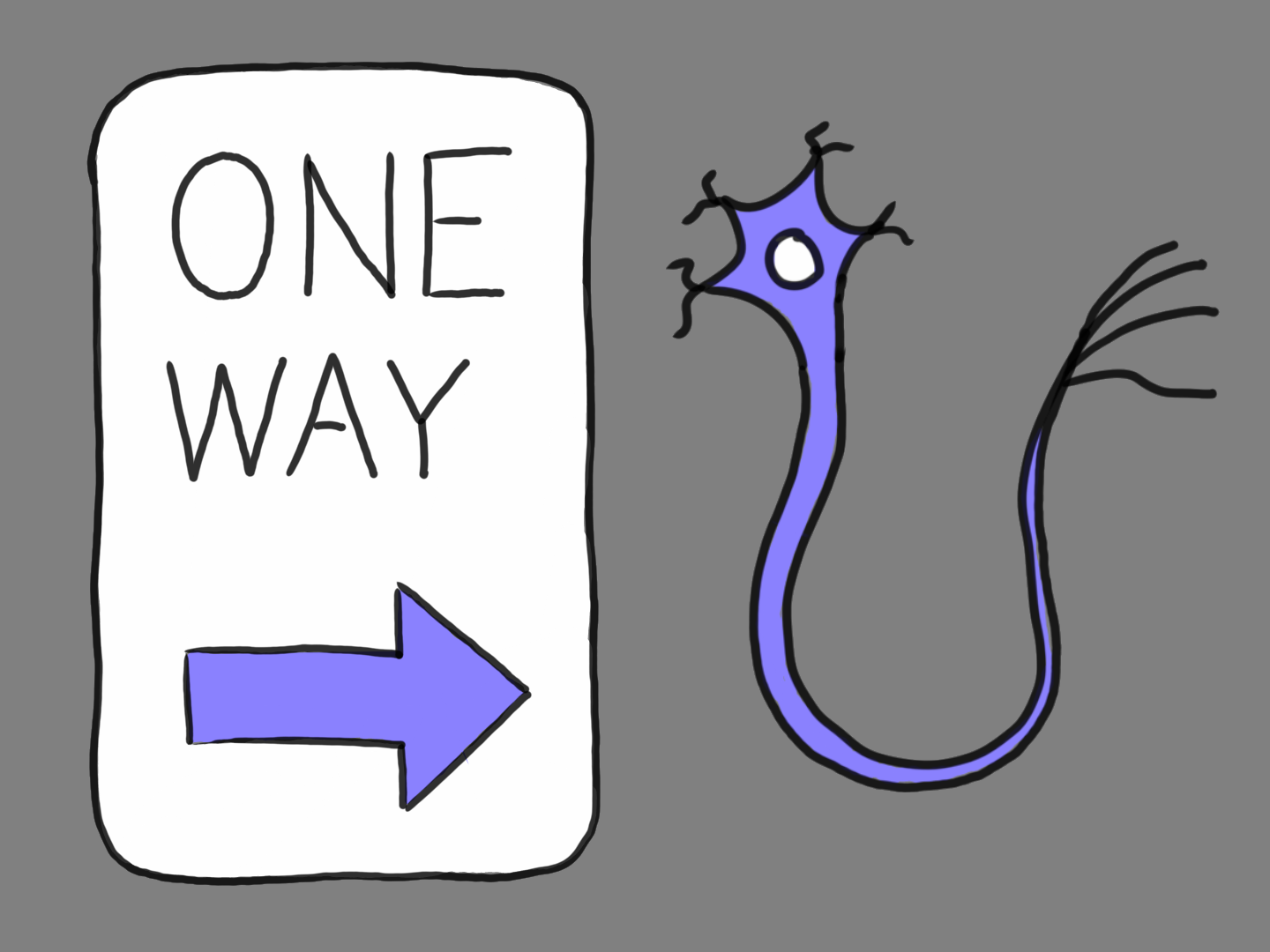
    Notice that action potentials are unidirectional (though neural circuits are often recurrent). Activating dendrites triggers action potentials. The human brain cannot be operating on a foundation of backpropagation because backpropagation requires an error signal to go in both the forward and backward directions. But that’s not how axon potentials works. Axon potentials are one-directional signals.

  • Pleasure

    Pleasure

    According to Buddhist dogma, life is suffering. This is counter-intuitive, because some things feel good, right? Doesn’t pleasure feel good?

    Yes. The following are both true:

    1. All fabrications in your umwelt have a positive suffering aspect.
    2. Adding fabrications to your umwelt can decrease your total suffering.

    To understand how this is possible, I am going to use a well-understood example: sound masking.

    Masking

    I used to work in a noisy open office full of people talking. This was kafkaesque because I worked as a computer programmer. I had to focus. People talking and dogs barking—yep, there were untrained dogs that barked at every visitor—interrupted my focus and made it hard to think about the software I was writing.

    To mitigate this problem, I put on music. When I listened to music, the office felt quieter, even though in absolute terms the volume of sound going into my ears had increased. Auditory masking isn’t unusual, and it isn’t limited to music. Adding the sounds of rain falling and fans blowing air can decrease the perceived volume of noise too.

    The brain is a predictive machine. Mild static gets adapted to at the low level, and is predicted away before they hit the cortex. But the static was part of the original signal, and therefore masks some annoying sounds in a bottom-up process.

    Top-down patterns reduce prediction error too. When you know how a song’s going to go, that can get predicted away too at the high level, in a top-down process.

    How does this relate to pleasure? If unpredictable signals are going through your brain, then adding predictable signals can drown out some of the percieved surprise. This is perceived as positive pleasure relative to the reference point.

  • Stream Entry

    Stream Entry

    Stream entry is the completion of your first insight cycle. Your first insight cycle is special because it forever changes the trajectory of your life. Stream entry is like becoming a parent. It fundamentally alters your value system and the constraints you live under.

    The most important thing about stream entry is that it sets off a chain reaction. Prior to your first insight cycle, you can “get off the train”, so-to-speak. Stream entry triggers a cascade of insight cycles. After your first insight cycle, insight cycles will continue for a long time. You can speed it up or slow it down, but there’s no stopping or reversing it. This process takes years, and may end only when you die.

    All insight cycles lower your baseline suffering by repairing disassociation, and stream entry is no exception. Stream entry can have an outsized impact, because stream heals the chronic suffering you perceive first, which tends to be the coarset, most obvious chronic suffering. It’s not unusual for stream entry to reduce your chronic suffering by something on the order of 90%.

    Stream entry is destabilizing too. Insight cycles are often destabilizing, but stream entry can be especially destabilizing because you go into it blind. The first time your basic perceptions about reality are shredded is more shocking than the tenth time.

  • Forgiveness

    Forgiveness

    Clinging to the evil acts people have done is unpleasant. The act does damage once, and then clinging to it continues to hurt you until you forgive the person.

    But what if the person is evil? All the more reason to forgive them. To say “this person is unforgivably evil” is backwards. The only reason to forgive someone is for being evil. After all, there is no need to forgive someone for being good.

    Forgiving does not equal forgetting. When a person does bad things, it is useful data. Useful data should be preserved. Forgiveness isn’t about consequentialism or justice. Those are extrinsic processes. Forgiveness is an intrinsic process. Forgiveness is simply letting go of grievance and accepting that people are what they are.

    What if a person’s acts are atrocious? Bad people are like crocodiles. Crocodiles are dangerous. It is a wild crocodiles’s nature to eat people. Pretending a crocodile is safe just puts people in unnecessary danger, which is bad. Forgetting that crocodiles are dangerous puts people in danger too. You shouldn’t allow a crocodile into your bedroom.

    Notice that forgiveness doesn’t have anything to do with strategic decisions. Forgiveness does not mean treating dishonest people as if they are honest, or treating violent people as if they are gentle. External actions are useful to the extent that they facilitate this internal process. It is difficult to forgive someone in your heart while you are screaming at him or her.

    Accepting that crocodiles are crocodiles does not put anyone in danger. It’s just a form of accurately modeling reality, which protects people from physical danger.

    Meanwhile, the crocodile you observe is a crocodile in your umwelt. When you resent it, you are resenting a part of your own umwelt, which drives disassociation and traps you in samsara.

  • Morality

    Morality

    Is morality objective or subjective? This is a question I like to ask when teaching philosophy. It is a zugzwang gambit. Both answers are traps.

    “Morality is objective”, answers the student.

    “If morality is objective then it must be measurable. How do you create a scientific experiment to measure morality?” I ask.

    “That is obviously impossible,” says the student, “Therefore morality is not objective. Since morality is not objective, morality must be subjective.”

    “Morality is subjective,” answers the student.

    “If morality is subjective, then does that mean there are no objective grounds with which to condemn evil?” I ask.

    “Of course not,” says the student, “Moral relativism does not exonerate evildoers. Since morality cannot be arbitrary, morality must be objective.”

    Politics is dominated by calls to “Crush <outgroup>!”, social conformity, and moral relativism. When you encounter those rare people with ethical sense, they tend to advocate an orthogonal compass.

    Love your enemies, do good to those who hate you, bless those who curse you, pray for those who persecute you.

    ―Jesus

    In Cyberbuddhism, the morality of conduct is defined by its intrinsic effect on your disassociation.

    • Moral conduct is thought and behavior that decreases your disassociation.
    • Immoral conduct is thought and behavior that increases your disassocation.

    Universal love is moral because it directly attacks dualism. Unconditional forgiveness is moral because it is incompatible with clinging. Speaking truthfully prevents doublethink. Mistreating other people for your own self-advancement is immoral because it it fuels disassociation.