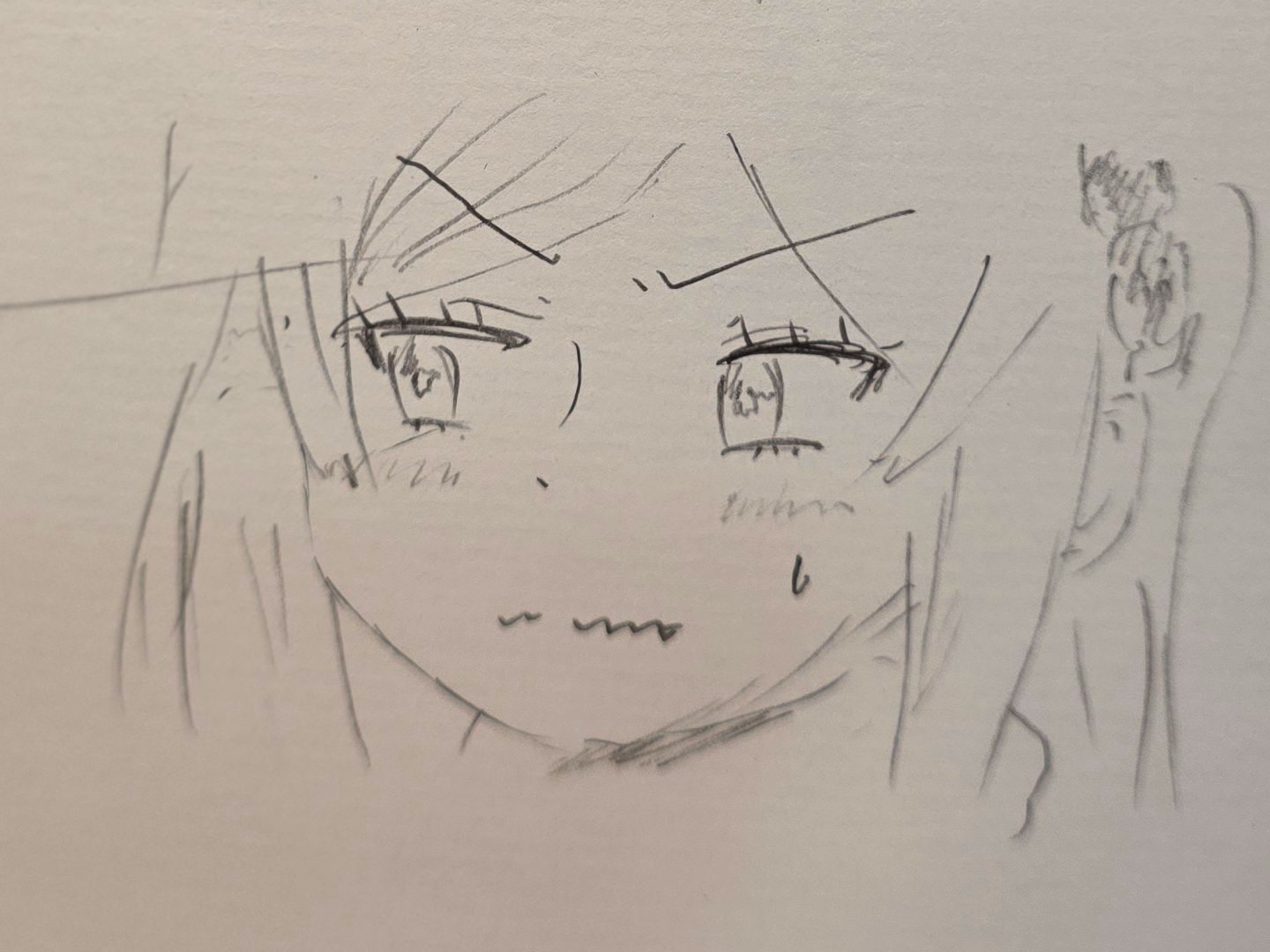
I was at my local drawing club when the topic of dancing came up. An attendee asked me if the dance was listed on MeetUp.com. When I told him it wasn’t, he lost interest.
This seemed backwards to me, because events on MeetUp.com are statistically more mediocre than events not on MeetUp.com. If an event isn’t on MeetUp.com, then that is a signal of high variance.
Why is this the case? Because of population dynamics. Meetup.com is an broad advertising platform. People drifting into an event because they saw it on MeetUp.com will tend to be people of average quality. Average people bore me. I want to hang around exceptional people.
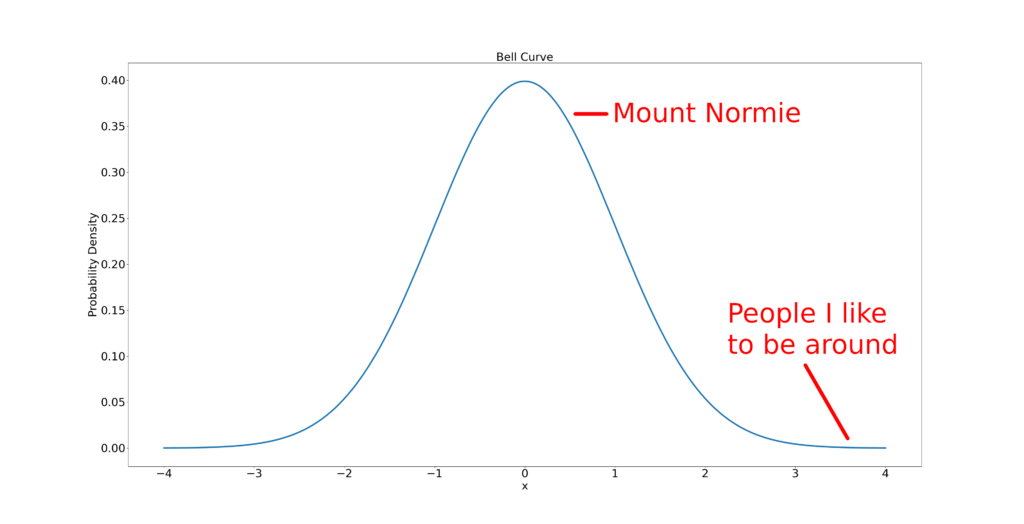
If you want to hang around exceptional people too, then you have 2 options:
- Have strong manual curation of attendees. (Private events.)
- Have strong self-selection of attendees. (Publics event with barriers to participation.)
Private events can be awesome at a small scale, but once they grow in size and prestige, the selection filter inevitably becomes “who wins political games”. This is why large exclusive events become infested with drama-filled politics (unless there is ruthlessly objective membership criteria like Y-Combinator).
Events that rely on self-selection, however, can scale arbitrarily large without the average attendee regressing to the external mean. As an example, consider my local comics drawing club (which have strong self-selection) versus general writers’ meetups (which have weak self-selection).
Artists vs Writers
There’s an awesome drawing meetup I go to. We go to a coffee shop in the morning and everyone hangs out together and draws. Everyone there is awesome.
I’ve also been to many writing meetups where everyone gets together at a coffee shop and writes together. These tend to be boring.
Why is the drawing club so much cooler than the writing club? Because in the drawing club everyone can tell exactly how bad they are. You can lie to yourself about whether paint on a canvas is “Art”, but you can’t lie to yourself about whether a picture is pretty. In this way, everyone at the drawing club can’t deny exactly how good they are at drawing.
Writing is a different. Who can say which of two novels is better? Certainly not the authors. Writers’ meetups tend to be filled with people who spend years writing a novel without ever publishing it. Unless you are a published novelist of a regular blogger, it’s difficult to tell how good you are. Writers meetups are such low quality of attendees that I’ve made friends with more successful writers at dance halls than I have at writing meetups. (Conversely, dance halls also have very high quality of attendees.)
The drawing meetup I go to is posted on MeetUp.com, which means there’s a constant flow of mediocre people coming in the door from week to week. But nearly all of them bounce off never to return because they can see exactly how bad they are at drawing and don’t like it. In this way, legible skill differentials produce self-selected communities of awesome people.
Finding a Good Sangha
What does this have to do with Buddhism? Sometimes people ask me where to find good teachers. I feel like this question is putting the cart before the horse. If you’re in a strong Buddhist community, then you’ll be surrounded by excellent potential teachers. At my local zendo, usually >10% of any group will be awakened. When you’re surrounded by that many awakened people, finding good teachers is a non-issue. It’s like finding good artist mentors in Leonardo’s workshop.
How do you find a good Buddhist community then? You look for a community that does a lot of meditation with a minimum of talking, because that’s what’s effective. Good practitioners will naturally gravitate toward such a community and bad practitioners will naturally be repelled bysuch a community. After that, everything takes care of itself.